Half Your Brain Is Watching: How the Second Screen Ate the First One
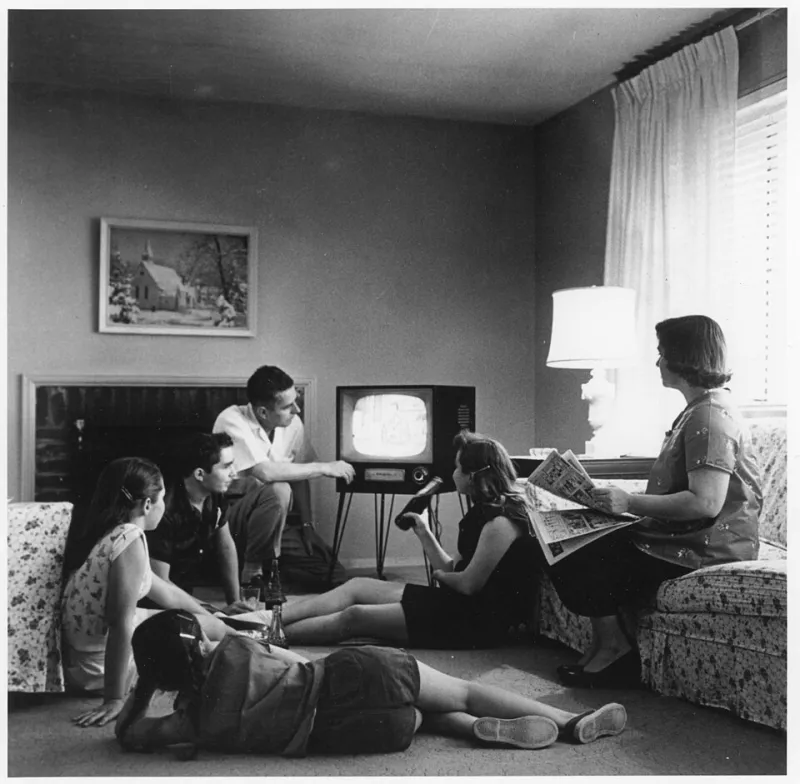
Photo: Evert F. Baumgardner, Public domain, via Wikimedia Commons
Ask someone what happened in the last show they finished and watch their face do something complicated. There is a pause. A vague gesture. A title of an episode that might be from a different season. Then, often with a laugh: I don't really remember, I was on my phone.
That is not a confession of poor attention. It is a description of the dominant viewing mode of the decade. The second screen is not an interruption of television anymore. In a lot of households it is the co-star.
The couch became a command center
The setup is almost universal now. A show playing on the big screen, a phone in hand, maybe a laptop open with a live thread or a shopping cart. The TV supplies atmosphere and the occasional big moment. The phone supplies the actual engagement.
What is interesting is that this is not laziness. It is a response to how television is built. Episodes run long, recaps eat the first four minutes, and streaming services removed the one thing that used to force attention: the weekly wait. When you can pause anything and resume it three days later, your brain stops treating a show as an appointment and starts treating it as a backdrop that occasionally asks for input.
What split attention does to memory
Here is the uncomfortable part. When you divide attention between two streams of information, you do not get both at half strength. You tend to get a thin version of each, and the memory that forms is fuzzy on detail but strong on vibe.
Ask a second-screen viewer about a season finale and you will often get the emotional register rather than the plot: it got sad at the end, the mom came back, something happened with the brother. The feeling stuck. The sequence did not.
That is fine for some shows. It is a real loss for others, and the gap between those two categories is wider than most of us admit. A twist that only works if you have been tracking a character for eight hours cannot land on someone who caught half of it. The show still delivers, technically. It just delivers to a person who is not fully there for it.
Shows are now written for the people not looking
Here is the part that should make you sit up. Creators and showrunners know the audience is half-elsewhere, and they have started building for it.
- Dialogue carries the plot. If viewers are glancing away, the story cannot live entirely in a visual detail in the corner of the frame. Characters say the important thing out loud, sometimes twice.
- Recaps andPreviously On segments got more generous. Streaming shows with a long gap between seasons now assume you remember nothing and are happy to remind you.
- Music cues do heavy lifting. A needle drop tells you how to feel in a way a glance at the screen cannot miss.
- Rewatchability is a design goal. Shows that can be half-watched twice get more total hours, and total hours are the number that gets talked about in renewal meetings.
- Scenes are self-contained. The five-minute scene that plays great as a clip is now a deliberate unit of construction, because that clip is going to live on its own whether the show wants it to or not.
This is where second-screen behavior quietly changes what gets made. A dense, talky, slow-burn drama might be the best thing on a service and still lose a renewal fight to a show that plays beautifully in the background while someone folds laundry.
The group chat is now part of the show
Then there is the social layer. Live threads, group chats, and reaction posts have become the place where a lot of viewers actually process what they are watching. The commentary is simultaneous with the episode, and for a certain kind of show — reality competition, weekly genre drops, anything with a fandom — the commentary is half the reason to watch at all.
That is not a downgrade. It is just a different shape of attention. The problem is when the commentary fully replaces the show, and you finish eight episodes having mostly read jokes about them.
The honest trade-off
Nobody is going to stop scrolling. The phone is going to be there, and some nights you genuinely want background noise while you answer texts. That is a legitimate way to spend an evening.
The trick is knowing which mode you are in before you press play. If you want to actually experience something, give it one episode of undivided attention — phone in another room, lights down, no second tab. If it does not hold you under those conditions, that is real information about the show. If it does, you may find yourself reaching for the remote less and remembering a lot more.
We spend more hours watching than ever. It might be worth spending a few of them actually there.