Nothing You Love Online Is Guaranteed to Stay There: Building a Watch Library That Lasts
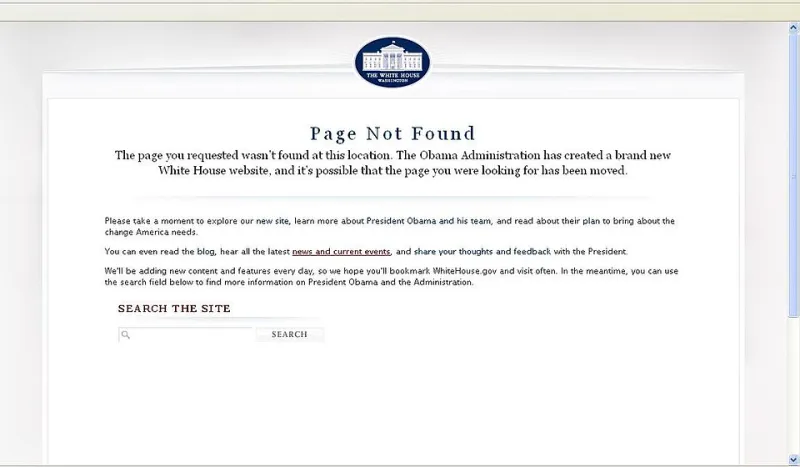
Photo: Executive Office of the President, Public domain, via Wikimedia Commons
Let me tell you about the best video essay I've ever seen. I can't show it to you. I can't even find it. The channel deleted it during a rebrand in 2021, and all that's left is my memory of it and a dead link in a Discord conversation that now reads like a eulogy.
This happens constantly, and most of us pretend it doesn't.
The Internet Forgets on Purpose
We talk about the web like it's permanent — "it's on the internet forever," we say. For video, that's increasingly a fantasy. Channels get deleted, sometimes by choice, sometimes by hack. Creators purge old content to rebrand or chase algorithm favor. Music licensing deals expire and videos get muted or blocked in entire countries. Shows drift between streaming services and vanish into regional rights mazes. And when a creator dies, their library's fate often hangs on a password nobody wrote down.
Researchers who study link rot have found that a meaningful share of links go dead within just a few years. Video is arguably worse, because video lives on platforms, and platforms make unilateral decisions. Your bookmark isn't a save. It's a wish.
The Watch-Later Queue Is a Lie We Tell Ourselves
Here's the uncomfortable audit: open your watch-later playlist right now. How many videos are in there? Hundreds? Thousands? Now ask how many you've actually watched in the past month.
The watch-later queue has become a junk drawer — a place where good intentions go to expire. It's not curation; it's deferral. And because it feels like you've "saved" something, it produces a false sense of security while the underlying videos quietly rot. Some get deleted. Some get region-locked. Some get re-uploaded in degraded quality by content farms, and now the version you eventually click on isn't the one the creator made.
What a Real Watch Library Looks Like
The alternative is treating the videos you care about the way collectors treat physical media: deliberately, with intent, and with backups.
Save with metadata, not just links. A URL is the most fragile part of any video. When you save something, capture the title, creator, date, and a sentence about why it mattered to you. If the link dies, you at least know what you're looking for — and a re-upload search becomes possible.
Take notes. This sounds fussy until you try it. A two-line note about what a video argued, what you thought about it, and which timestamp hit hardest turns a pile of links into something more like a commonplace book. Future-you will be grateful, especially when the algorithm-suggested video you vaguely remember can't be found by vibes alone.
Consider off-platform preservation for the things that truly matter. I'm not suggesting you rip everything — that's legally murky territory depending on where you live and what you're saving. But for your own uploads, your own projects, videos you have permission to keep, or content you've licensed, keeping a local or cloud copy is just common sense. Creators especially: back up your own work. Platforms are hosts, not heirs.
Periodically prune and verify. Once a season, click through your saved links. Dead ones get noted and removed. This turns your library from a landfill into a living archive.
The Case for Caring
There's a cultural argument here too. A huge portion of the last two decades' creative output — the tutorials, the essays, the comedy, the documentation of ordinary life — exists on platforms that owe nobody permanence. Future historians will study our era through video, and enormous swaths of it are evaporating in real time.
You can't fix that alone. But you can refuse to let the things that mattered to you be part of the casualty count. A personal watch library — deliberate, annotated, occasionally backed up — is a small act of resistance against an internet that treats everything as disposable.
The video essay I lost is gone. Yours don't have to be. Start saving like it's temporary, because it is.