Why You'll Never Actually Cancel: The Open Tab Theory of Streaming Addiction
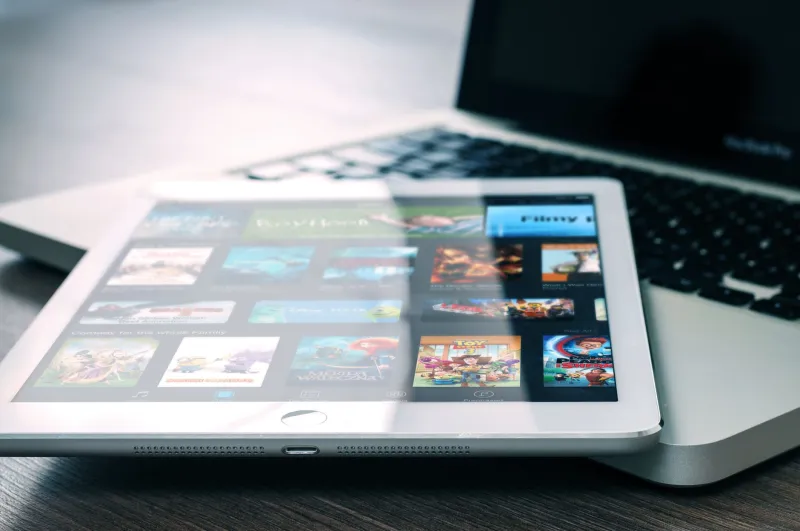
Open your phone right now. Go ahead. Count the streaming apps sitting in your dock or your most-used folder. If you're like most Americans, you've got at least four or five of them — Netflix, Max, Hulu, Disney+, maybe Peacock hanging around from that one NFL game. Now think about how many of those you actually opened this week.
Exactly.
Here's the thing nobody's saying out loud: streaming platforms don't just want you to watch their content. They want you to keep tabs open. Literally and figuratively. The whole architecture of how these services are built — the apps, the browser interfaces, the endless watchlists — is quietly designed to make leaving feel like a loss, even when you've barely touched the thing in two months.
This is what we're calling the Open Tab Theory of Streaming Addiction. And once you see it, you genuinely cannot unsee it.
The Watchlist Is a Trap (And a Brilliant One)
Every major platform has some version of a watchlist. "My List" on Netflix. "Watchlist" on Max. "My Stuff" on Hulu. The feature exists, ostensibly, to help you remember what you want to watch later.
But think about what that feature actually does to your psychology.
Every time you add a show, you're making a micro-investment. A small mental commitment. "I'm going to watch this." And the more you add — the longer that list grows — the more you feel like you're owed something by the platform. Like you've got unfinished business. Canceling while you've got 47 titles sitting in your queue feels almost irresponsible. Wasteful, even.
Streaming companies know this. That "Add to List" button isn't just a convenience feature. It's a retention mechanism dressed up as a favor.
Tabs as Psychological Anchors
On the browser side, things get even more interesting. If you've ever sat at your laptop trying to decide what to watch, you've probably had multiple streaming platforms open simultaneously — one tab for Netflix, one for Prime Video, maybe one for YouTube. You're comparison shopping, basically. Scanning for something worth your time.
Platforms have quietly designed their interfaces to reward exactly this behavior. Autoplay trailers start the second you land on a title page. Personalized carousels are calibrated to surface something almost perfect, just intriguing enough to keep you hovering. The goal isn't necessarily to get you to commit to watching right now. It's to keep the tab open. To keep the possibility alive.
An open tab is a subscription that doesn't feel like it's being questioned. A closed tab is the first step toward cancellation.
The "Maybe Later" Economy
America runs on deferred decisions, and streaming platforms have built entire business models around that tendency. The "maybe I'll watch this later" impulse is their single most valuable asset.
Think about how streaming services market themselves during their big content drops. They're not just selling you the show — they're selling you the event of eventually watching it. The cultural conversation. The thing you'll have something to say about at brunch. You add it to your list. You keep the app. You pay another month.
This is especially effective with prestige limited series. A buzzy HBO miniseries or a Netflix true crime doc creates urgency — but not immediate urgency. You want to watch it before everyone spoils it, but you're not watching it tonight. So you keep the subscription active in a kind of holding pattern, a promise to yourself that you'll get around to it. Platforms have essentially monetized your procrastination.
Seven Apps in the Dock: What That Actually Means
Let's go back to those apps in your phone dock. Having multiple streaming services loaded up and ready to go isn't just a habit — it's a signal that each of those platforms has successfully embedded itself into your daily decision loop.
When you open your phone to wind down at night, you don't think "should I subscribe to Netflix?" You think "what should I watch on Netflix?" The subscription question has already been answered, by default, before you've even consciously engaged with it. That's incredibly powerful.
App placement is deliberate on the platforms' end too. They invest heavily in user experience specifically so that their app feels like a natural part of your phone's ecosystem. Smooth interfaces, quick load times, offline downloads — all of it is engineered to make the app feel essential. Not a luxury you could trim from the budget. A utility, like your weather app or your messages.
The Friction of Leaving
Cancellation flows are famously, almost comically, difficult on most major platforms. Buried menu options, multiple confirmation screens, "are you sure?" prompts, and last-ditch discount offers — it's all friction, carefully calibrated to make you second-guess the decision.
But the real friction isn't the cancellation process itself. It's everything that came before it. The watchlist you built. The shows you half-finished. The tab that's been sitting open since Tuesday. By the time you've navigated to the cancellation page, you've already been worn down by months of psychological investment that the platform quietly encouraged you to make.
Some services have even started sending "we noticed you haven't watched lately" emails — framed as friendly check-ins, but functioning as guilt trips. You're paying for this. Shouldn't you use it? It works, because Americans are genuinely allergic to feeling like they've wasted money, even if watching something just to justify the cost isn't actually a good use of their time.
So What Do You Do With This?
Knowing the game doesn't automatically mean you win it. But it does give you a little more agency in how you engage with these platforms.
A few honest questions worth asking yourself: Is your watchlist actually a plan, or is it just a graveyard of good intentions? Are you keeping a subscription because you're actively using it, or because canceling feels like admitting defeat? Is that open tab on your laptop doing anything except making you feel like you have options?
The rotation strategy — subbing in, watching what you want, then subbing out — is genuinely the most consumer-friendly way to engage with the current streaming landscape. Platforms hate it, which is basically your clearest sign that it's the right move.
Your tabs don't have to be their insurance policy. Close a few. See what happens. The shows will still be there when you come back — and you'll probably enjoy them more when you're not watching out of obligation.